FREE SHIPPING ON ORDERS OVER $75

Hospital Bed vs Adjustable Bed: Which One Do You Need at Home?

Nearly every day, our product specialists support customers who are trying to find a bed for their home but don’t know exactly what they need. They might describe exactly what they want while calling it a “hospital bed,” only to discover that the features they are looking for are also available on certain adjustable beds. Or, the opposite will happen.
That’s because hospital beds and adjustable beds aren’t completely separate categories. There can be significant overlap between them, particularly among higher-end adjustable beds designed for home care. Both may offer adjustable head and foot positioning, and some adjustable beds also include height adjustment and other features commonly associated with hospital beds.
The important question isn’t simply what the bed is called. It’s what functions, safety features, dimensions, and care capabilities you need from it.
Understanding those differences before you buy can help you avoid paying for features you don’t need, or choosing a bed that doesn’t provide the functionality required for your home or care situation.
What Is a Hospital Bed?
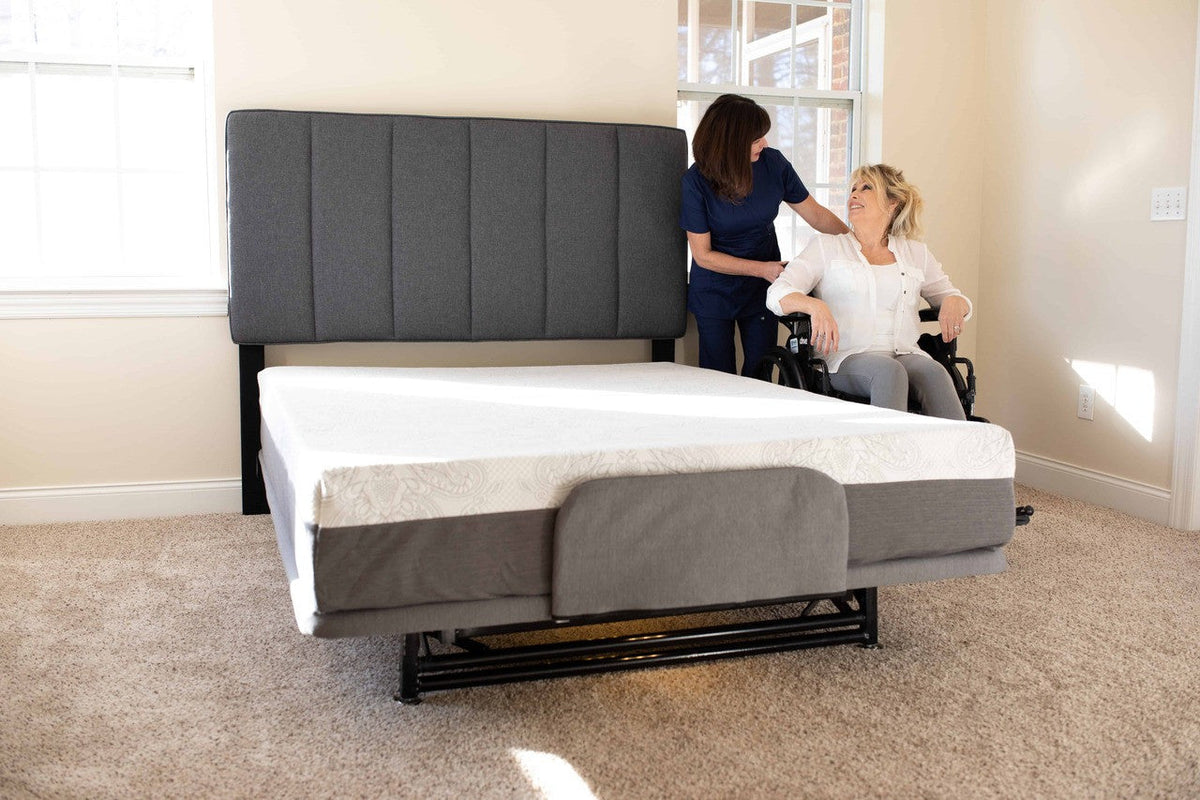
A hospital bed is designed with home care, positioning, accessibility, and caregiver needs in mind. Depending on the model, electric hospital beds may allow the head, foot, and overall bed height to be adjusted using a hand control.
One of the most important distinctions to understand is height adjustment. Full-electric hospital beds typically allow the entire sleeping surface to move higher or lower, which may make transfers, caregiving tasks, and getting in and out of bed easier. Some low hospital beds are also designed to reach a particularly low minimum height.
Hospital beds are available in many configurations, including semi-electric, full-electric, low, hi-low, bariatric, and more residential-looking home care models. Side rails, mattress types, weight capacities, widths, and positioning capabilities also vary significantly from one bed to another.
Hospital beds are often paired with mattresses specifically designed for medical or home care applications, including foam, pressure-relief, alternating pressure, and other specialty mattresses.
If you’re still comparing options, our guide to hospital beds for home care explains the different types of hospital beds, common sizes, and positioning features in more detail.
What Is an Adjustable Bed?
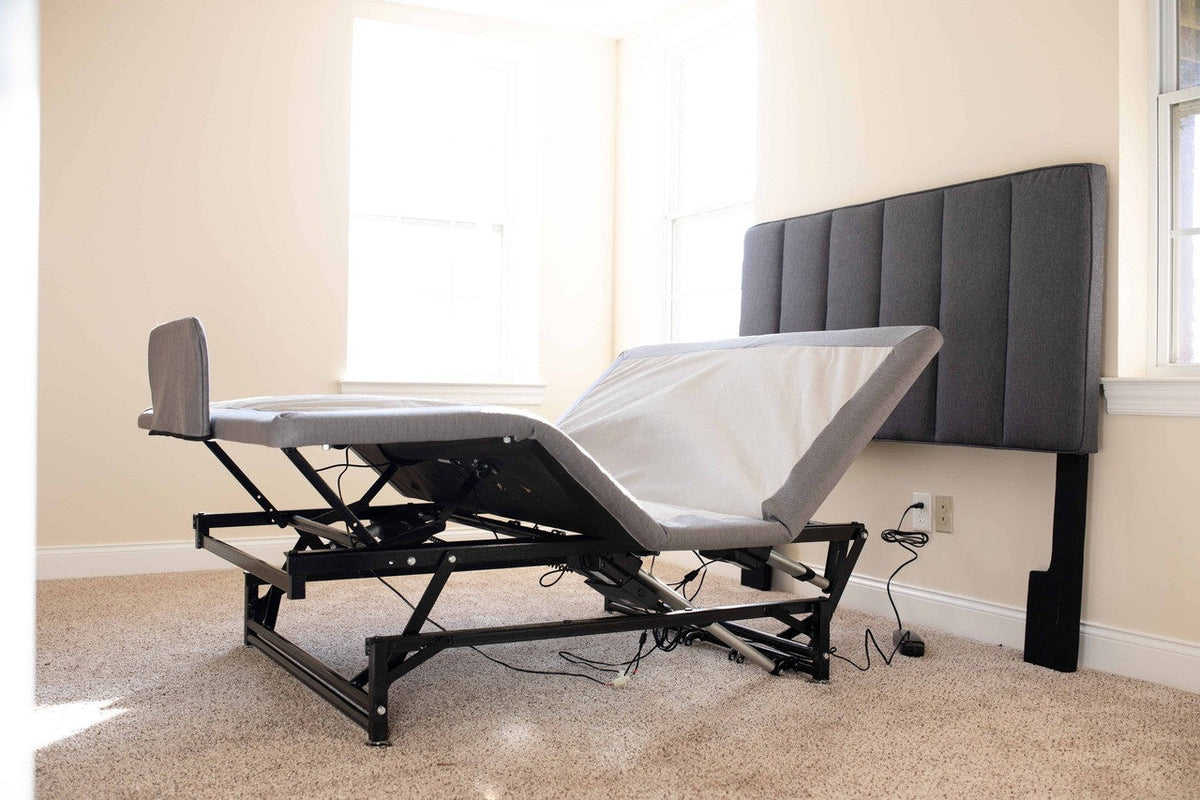
An adjustable bed is a bed that allows the sleeping surface to change position, most commonly by raising or lowering the head and foot sections.
Many people associate adjustable beds with residential comfort: reading, watching TV, sleeping in a raised position, or simply finding a more comfortable sleeping angle. And many adjustable beds are designed primarily with those goals in mind.
However, adjustable beds are not necessarily limited to comfort features.
Certain adjustable beds designed for home care offer functionality that overlaps considerably with hospital beds. Depending on the model, that may include head and foot positioning, overall height adjustment, higher weight capacities, compatible side rails, and other features intended to make the bed more practical for someone receiving care at home.
One of their biggest advantages is appearance. Some adjustable home care beds are designed to provide hospital-bed-style functionality while looking much more like a traditional bedroom bed.
Mattress compatibility also varies by model. Some residential adjustable frames work with a wide range of compatible mattresses, while more specialized home care models may have specific mattress size or construction requirements.
If an adjustable bed sounds like the better fit, use our Adjustable Bed Buying Guide to compare bed types, important features, room-fit considerations, and options for different mobility needs.
Full Electric Hospital Bed vs. Adjustable Bed for Home Care
So, as you make your buying decision, how do you choose between a hospital bed and an adjustable bed for your home?
Rather than assuming one category is always more appropriate than the other, compare the specific functions of each bed you are considering.
Height Adjustment and Clinical Positioning
Both hospital beds and adjustable beds may provide head and foot positioning, but the amount of adjustment varies considerably.
A full-electric hospital bed generally allows the head, foot, and overall bed height to be controlled electronically. That full-bed height adjustment can be particularly useful when caregivers need to assist with transfers, dressing, repositioning, or other daily tasks.
A basic residential adjustable bed may only raise and lower the head and foot.
However, some higher-end adjustable home care beds also provide hi-low height adjustment and positioning functions similar to those found on hospital beds.
This is why it’s important to compare the specifications of the actual beds rather than relying only on the terms “hospital bed” or “adjustable bed.”
Fall Risk and Safety at Home
Safety features are another area where hospital beds and adjustable beds can differ—but again, the exact features depend on the model.
Some hospital beds are designed to reach very low minimum heights, which may be useful when fall risk is a concern. Many also offer compatible side rails, assist rails, or other accessories.
Certain adjustable home care beds may offer similar features, while basic residential adjustable frames typically do not.
If fall risk, nighttime confusion, limited mobility, transfers, or caregiver assistance are concerns, pay close attention to:
-
Minimum bed height
-
Side rail or assist rail compatibility
-
Overall height adjustment
-
Ease of getting into and out of bed
-
Mattress height
-
Weight capacity
-
Caregiver access
These specifications are often more useful than simply deciding between a “hospital bed” and an “adjustable bed.”
Which One Should You Choose for Your Home?
The best choice depends on how the bed will actually be used.
If the main priority is comfortable head and foot positioning and the person using the bed is relatively independent, a residential adjustable bed may provide everything you need.
If you want a more traditional bedroom appearance but also need additional home care functionality, a higher-end adjustable home care bed may offer an effective middle ground. Some models combine the appearance and comfort of an adjustable bed with functions that are commonly associated with hospital beds.
Not sure which type of bed fits your situation? Take our 2-minute bed matching quiz to narrow down the best options based on mobility, caregiver needs, and how the bed will be used at home.
If overall height adjustment, caregiver access, specialized safety features, higher weight capacity, or other medical-oriented functions are priorities, a hospital bed—or an adjustable home care bed offering those same functions—may be more appropriate.
You can also compare our top hospital beds for home to see how different models and features compare.
Don’t forget to consider the mattress as part of the decision. Hospital beds and adjustable beds can have different mattress size and compatibility requirements depending on the frame. Some hospital bed models require mattresses designed specifically for that frame or care application, while many residential adjustable beds accept a broader range of compatible mattresses.
Our product specialists can walk you through the features of the beds you’re considering and help you understand the differences before you buy.
Frequently Asked Questions
Is a hospital bed the same as an adjustable bed?
Not exactly. The categories overlap, but they aren’t interchangeable. Both hospital beds and adjustable beds can offer adjustable head and foot positioning. Hospital beds are generally designed around medical and home care needs, while many adjustable beds are designed primarily for residential use and comfort. However, some adjustable home care beds provide many of the same functions as a hospital bed while offering a more traditional bedroom appearance.
Can an adjustable model replace a hospital bed after surgery or injury?
It depends on the features required. An adjustable bed may provide the positioning someone needs during recovery, but basic residential adjustable beds may not include features such as full-bed height adjustment, compatible rails, or other home care functionality. Compare the specific bed features and discuss individual medical or care needs with the appropriate healthcare professional.
Do all hospital beds raise and lower in height?
No. This depends on the type of hospital bed. A semi-electric hospital bed typically provides electric head and foot adjustment but may use a manual mechanism for height adjustment. A full-electric hospital bed generally allows the head, foot, and overall bed height to be adjusted electronically.
Can adjustable beds raise and lower in height?
Some can. Basic residential adjustable beds typically adjust the head and foot without changing the overall bed height. However, certain adjustable home care beds include hi-low functionality that allows the entire sleeping surface to move higher or lower.
Do hospital beds need special bedding, or can I use what I already have?
It depends on the bed and mattress dimensions. Many hospital beds use mattresses sized specifically for the frame, and specialty pressure-relief mattresses may also have their own requirements. Adjustable beds may work with a broader range of compatible mattresses, but you should always confirm mattress dimensions and compatibility for the specific frame.
Still deciding? Browse our full selection of hospital beds for home use or see our top-rated picks. Our product specialists can help you understand the available features and find options that fit your home care needs.